
Buried Beneath the Fiction: The Real Legacy of Josiah Henson
- algary19641
- Jul 22, 2025
- 3 min read
Before the world knew “Uncle Tom,” there was Josiah Henson—a man whitewashed by fiction, but bold in truth.
Born Into Chains, Built for Freedom
In 1789, Josiah Henson was born into slavery in Charles County, Maryland—a world that saw his
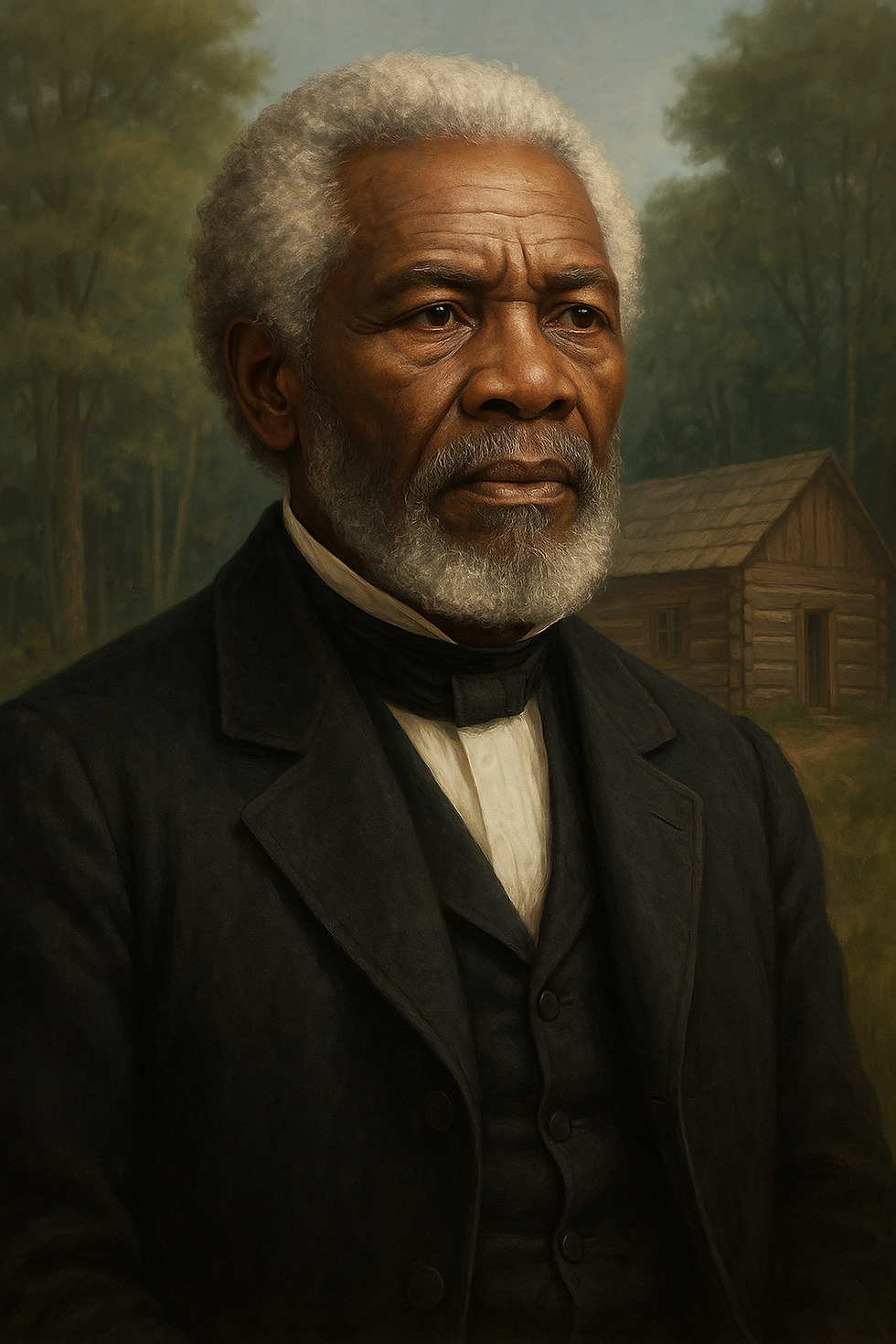
Blackness as a burden and his body as someone else’s property.
His early life was brutal:
His father was maimed and sold for defending his family.
Josiah was beaten, denied education, and sold repeatedly like a discarded item.
What Happened to Josiah Henson’s Father?
Josiah Henson’s father suffered a brutal fate for defending his family—a fate that reflects the harsh realities of slavery’s cruelty.
According to Henson’s 1849 autobiography, The Life of Josiah Henson, Formerly a Slave, Now an Inhabitant of Canada:
His father tried to protect Josiah’s mother from being sexually assaulted by a white overseer. In retaliation, the father was severely beaten, had one of his ears cut off, and was sold to a slave trader in the Deep South never to be seen again.
This traumatic event happened when Josiah was still a child and left a lasting impression on him. It was one of the earliest and most painful lessons he learned about the dehumanizing violence of slavery, especially against Black men who dared to stand up for their loved ones.
Still, even in bondage, he rose. His honesty and work ethic made him a trusted overseer. But let’s be clear: integrity didn’t free him; the system rewarded it with tighter chains.
Josiah Henson: Beaten, Barred from Education, and Sold Like Property
As a child and young man, Josiah Henson endured relentless physical abuse. He was whipped severely, often left bloodied and broken, especially when he tried to assert himself or resist mistreatment.
Despite his intelligence, he was deliberately denied an education, a common practice under slavery meant to keep enslaved people powerless. He once expressed his deep frustration at not being able to read, especially the Bible, which he longed to understand for himself.
Throughout his early life, Josiah was bought and sold multiple times, passed between enslavers like livestock, each time stripped of any stability or autonomy. He referred to this in his memoir as being treated “like a brute” valued only for his labor, never for his humanity.
“I was treated like a brute—beaten, denied the right to learn, and sold again and again like a worn-out tool.” — Josiah Henson, 1849 Autobiography
This was not just his story. It was the story of millions reduced, restrained, and refused dignity under the weight of slavery.
Escape Wasn’t Just Survival. It Was Strategy.
In 1830, Josiah made a bold move: He walked over 600 miles to Ontario, Canada—with his wife and kids seeking more than safety: he wanted freedom on his terms.
There, he didn’t just rest—he rebuilt.
He Didn’t Run. He Rebuilt
In Dresden, Ontario, he founded the Dawn Settlement—a thriving Black community with:
A school
A church
Skills training
And most importantly: freedom
Josiah became a minister, educator, abolitionist, and a real-life conductor on the Underground Railroad, helping others cross to freedom just like he had.
The Book That Whitewashed His Legacy
In 1849, Josiah published his autobiography: “The Life of Josiah Henson, Formerly a Slave, Now an Inhabitant of Canada.”
It told his story in his own words, raw, honest, courageous. But Harriet Beecher Stowe took his life and reshaped it into Uncle Tom’s Cabin, a novel that would become famous, but dangerously misleading.
Rather than honoring his fight, the book whitewashed him.It turned a warrior into a weak symbol, birthing the term “Uncle Tom,” a gross misrepresentation used to mock and minimize Black resilience.
The world remembered the fiction but forgot the fire.
Death Didn’t Silence Him. We Just Stopped Listening
Josiah Henson died in 1883, at 93 years old. But for generations, his legacy was buried beneath the myth Stowe helped create.
Today, history is slowly correcting itself:
His former plantation is now the Josiah Henson Museum & Park in Maryland.
Canada honors him as a national hero.
And platforms like Legacy of Silence are bringing his real story back into the light.
Why Josiah Henson Still Matters
Let’s be real: Josiah Henson wasn’t docile. He wasn’t a “character.”He was a father, builder, freedom seeker, truth teller, and leader.
He was viewed as a derogatory figure in Black history—but he was so much more.
He turned pain into purpose, and his voice—once buried beneath whitewashed fiction now rises again with clarity and power.
Share this story.
Break the silence.
Josiah Henson deserves more than a footnote. He deserves his name back.
Source:
Henson, Josiah. The Life of Josiah Henson, Formerly a Slave, Now an Inhabitant of Canada (1849), Chapters II–IV.


Comments